

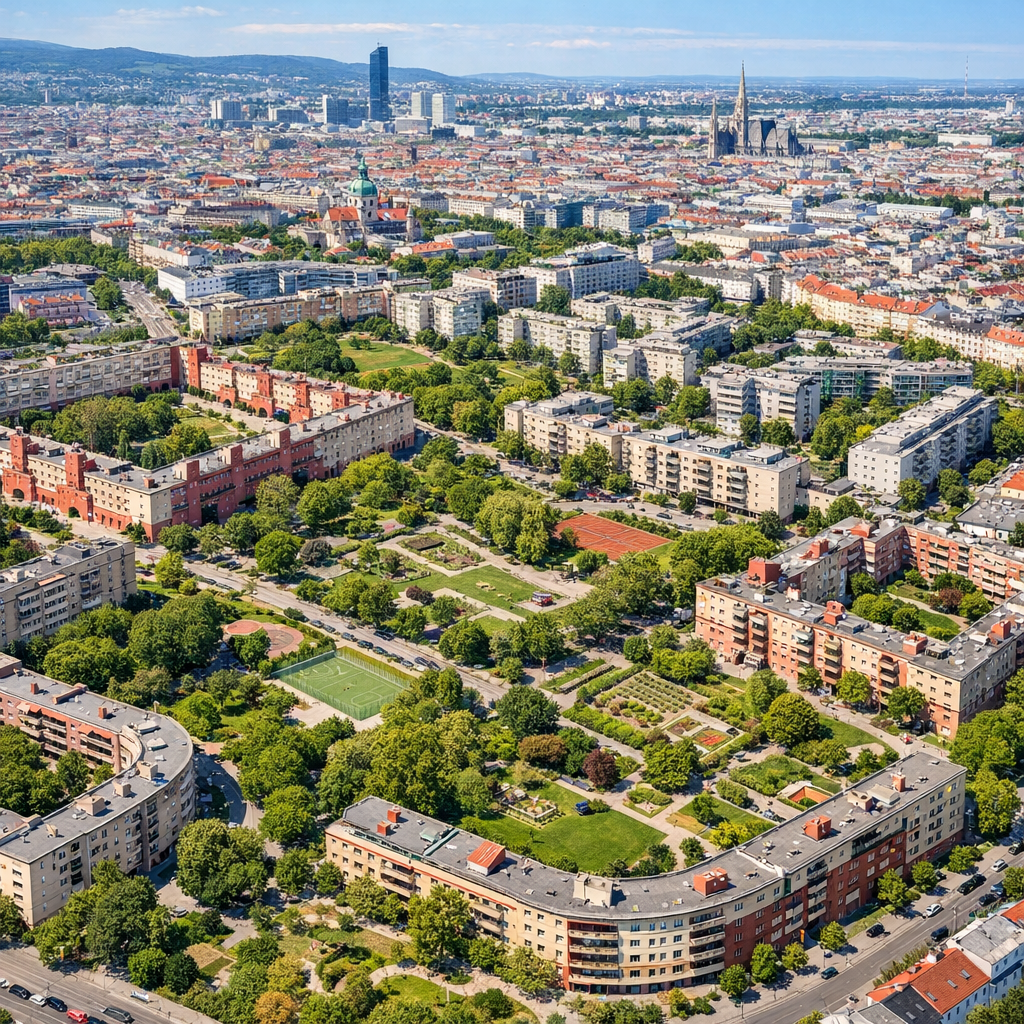
Vienna has long been celebrated for its robust social housing system, providing affordable living options to a significant portion of its residents. However, recent developments have brought to light challenges that threaten the sustainability of this model.
Population Growth and Housing Demand
In 2023, Vienna’s population surpassed two million, marking a significant demographic milestone. This growth has intensified the demand for housing, leading to increased pressure on the city’s social housing infrastructure. The Urban Development Plan (STEP 2025) aims to address this by promoting urban expansion and densification while preserving green spaces. However, implementing these strategies effectively remains a complex task.
Rising Costs and Affordability Concerns
Despite the city’s commitment to affordable housing, rising construction costs and the impact of short-term rentals have posed challenges. The Austrian government has introduced measures such as rent caps and extended rental agreements to mitigate these issues. Notably, rent increases have been limited to 1-2% for tenants, aiming to stabilize housing affordability.
Innovative Housing Solutions
To address these challenges, Vienna has embarked on innovative housing projects like Seestadt Aspern, one of Europe’s largest urban development initiatives. This project focuses on climate-friendly and resource-efficient living, aiming to accommodate 25,000 residents by 2032. Such initiatives reflect the city’s proactive approach to sustainable urban development.
Community Integration and Social Infrastructure
Beyond providing housing, Vienna’s social housing model emphasizes community integration. Historic complexes like Karl-Marx-Hof offer communal facilities that foster social cohesion. Additionally, projects like Volkshilfe Wien hafen provide multi-generational housing with social assistance, highlighting the city’s commitment to inclusive living environments.
Looking Ahead
As Vienna continues to grow, balancing the expansion of social housing with affordability and sustainability remains a critical challenge. Ongoing discussions and policy adjustments aim to ensure that the city’s housing model can adapt to evolving needs while maintaining its core principles of inclusivity and accessibility.