

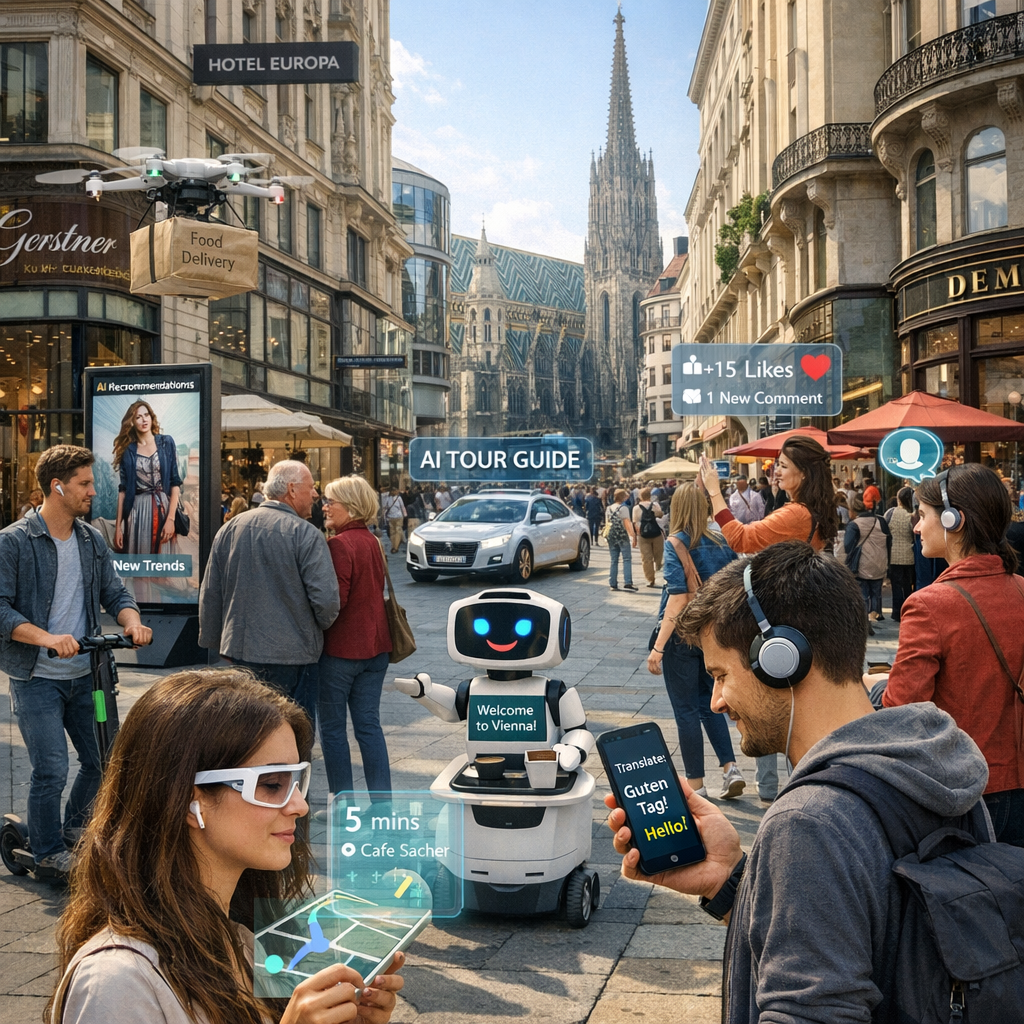
Vienna has emerged as a vibrant hub for artificial intelligence (AI), with a dynamic ecosystem of over 200 startups, more than 15 universities and research institutions, and a growing number of international companies establishing their European headquarters in the city. This thriving environment is not only fostering innovation but also significantly impacting the daily lives of residents and the operations of local businesses.
AI Startups Driving Innovation
Several Vienna-based AI startups are at the forefront of this transformation. For instance, neob, a deep tech AI company, specializes in creating real-time, low-latency AI systems that enhance human-machine interactions. Their products, such as bitpull.ai, offer voice assistants for e-commerce platforms, providing immediate and efficient customer support. This technology is particularly beneficial for local businesses aiming to improve customer engagement and streamline operations.
Smart Devices Enhancing Everyday Life
The adoption of smart household devices in Vienna has seen a significant uptick. According to Statistics Austria, the proportion of users of smart household technology in Austria increased from 12% in 2020 to 24.3% in 2024. Consumers are increasingly drawn to devices like robotic vacuum cleaners, smart lighting systems, and kitchen assistants that offer immediate practical benefits, such as energy savings and convenience. This trend reflects a broader shift towards integrating AI-driven solutions into everyday life.
AI in Public Services and Research
Vienna’s commitment to AI extends beyond the private sector. The city actively supports AI adoption in public services, with numerous projects and initiatives focused on utilizing AI for public benefit. Research institutions like the Austrian Research Institute for Artificial Intelligence (OFAI) contribute to this effort by conducting studies in language technology, neural computation, and intelligent software agents, further embedding AI into the fabric of the city.
Conclusion
As Vienna continues to embrace AI, the synergy between innovative startups, smart technologies, and supportive public policies is creating a dynamic environment where technology enhances both business operations and daily life. This ongoing AI revolution positions Vienna as a leading digital capital in Europe, offering a glimpse into a future where AI seamlessly integrates into the urban experience.