

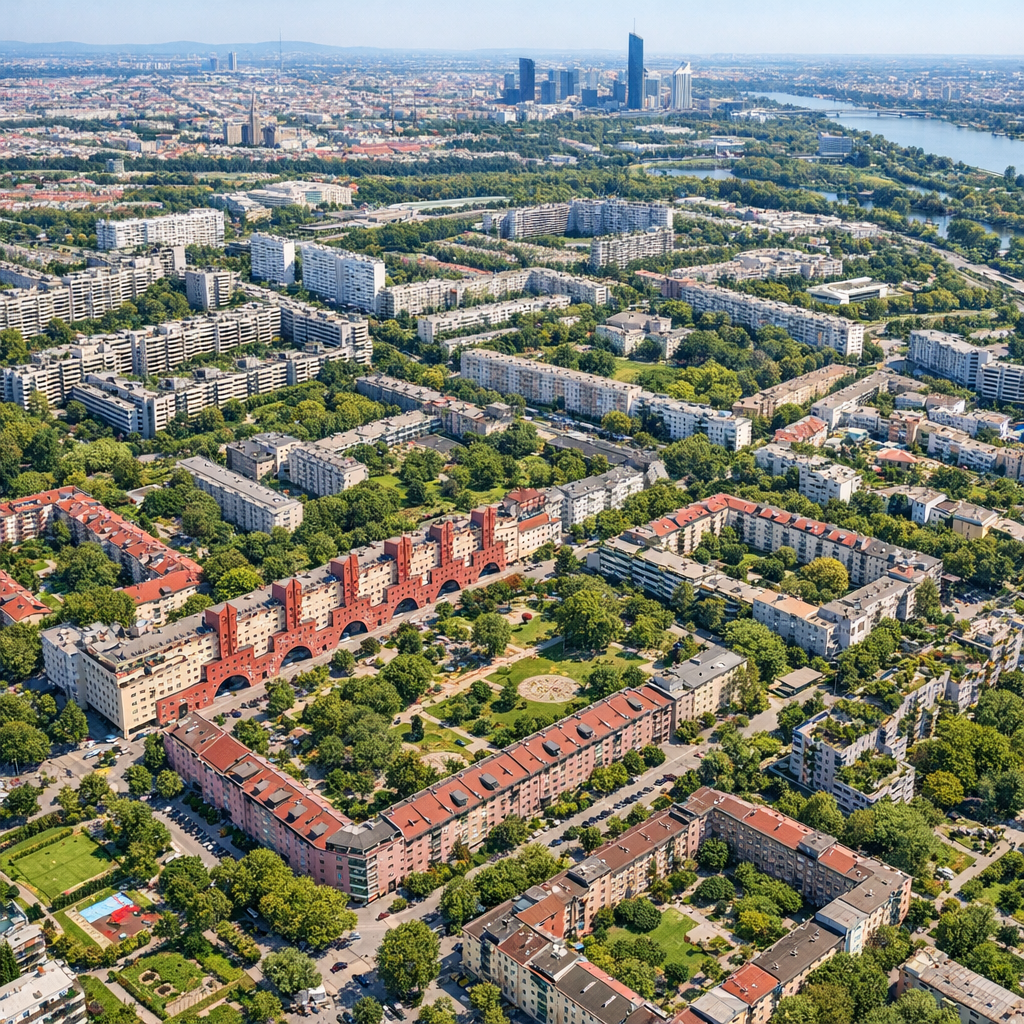
Vienna has long been celebrated for its robust social housing system, providing affordable living options to a significant portion of its residents. However, as the city’s population surpasses two million, this model encounters new challenges.
Population Growth and Housing Demand
In 2023, Vienna’s population exceeded two million, making it the fifth-largest city in the European Union. This growth intensifies the demand for housing, prompting the city to adopt strategies that combine urban expansion with the densification of existing areas. The Urban Development Plan (STEP 2025) emphasizes land-conserving development while maintaining the city’s green spaces, which constitute 50% of its territory. New projects aim for a density of 2.5 (gross development area), and existing postwar quarters are slated for further development.
Demographic Shifts and Housing Needs
Vienna’s demographic landscape is evolving. The city experiences both a decreasing average age and an increasing number of older citizens. Addressing the diverse needs of these groups is crucial. Efforts are underway in the housing sector to cater to various lifestyles, but intensified, targeted approaches are necessary to accommodate the differing requirements of all age groups.
Maintaining Social Mix and Affordability
Since the 1920s, Vienna has promoted a socially mixed city by providing social housing across all districts. The proportion of social housing varies, from 10% in the 8th district to 65% in the 11th. However, the availability of low-cost, low-standard dwellings from the Gründerzeit era has declined due to modernization efforts. To counteract this trend, initiatives like the SMART housing construction program and the resumption of municipal housing construction under “Municipal Housing NEW” aim to offer more affordable units in new developments.
Green Social Housing and Climate Action
Vienna’s social housing also plays a pivotal role in the city’s climate action plans. Public ownership and regulation facilitate large-scale green projects, positioning social housing as a “first mover” for sustainable building practices. Developer competitions and stringent sustainability criteria drive innovation in the construction sector, fostering a cycle of increasingly eco-friendly development.
As Vienna continues to grow and diversify, its social housing system must adapt to ensure it remains a pillar of affordability and inclusivity for all residents.