

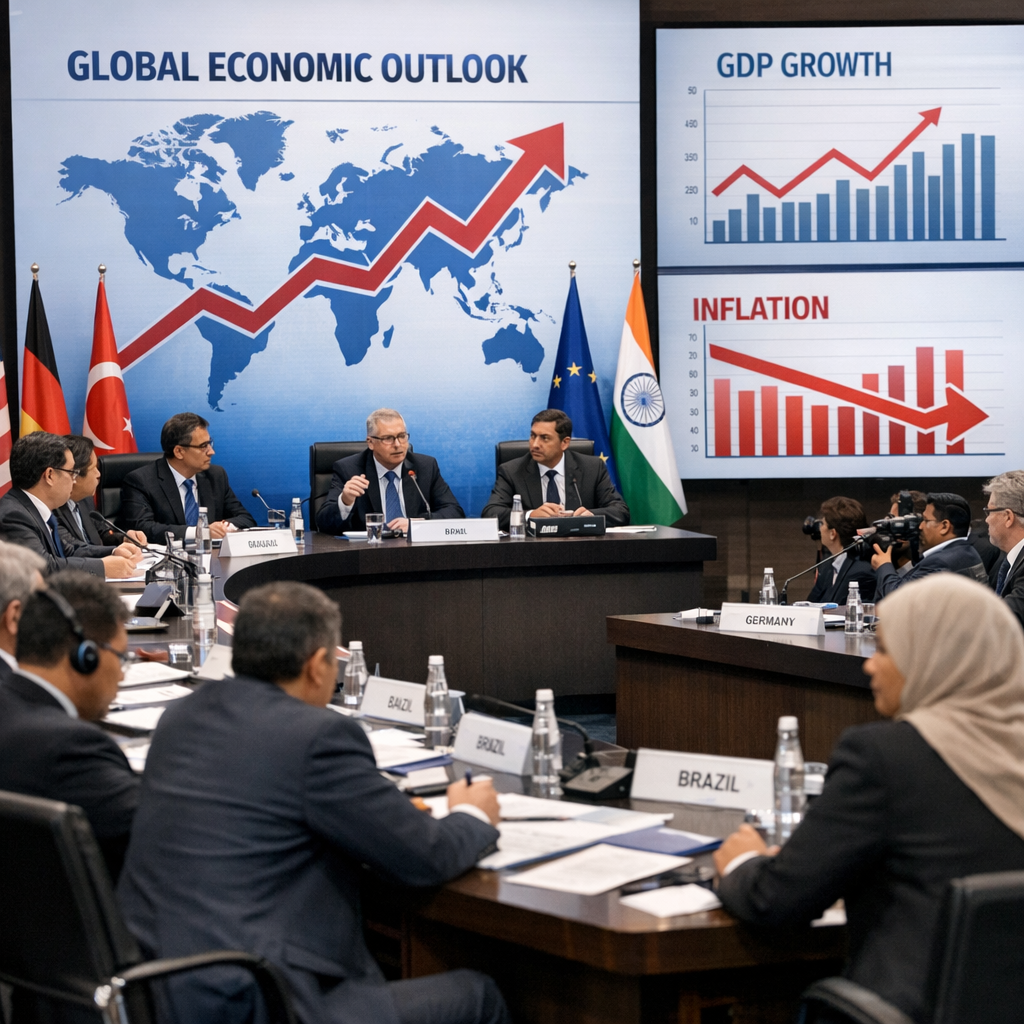
The global economy is currently navigating a complex landscape marked by geopolitical tensions, technological advancements, and shifting trade dynamics. Understanding these trends is crucial for assessing their potential impact on Austria’s economic outlook.
Global Growth Projections
According to the International Monetary Fund (IMF), global growth is projected to slow to 3.1% in 2026, down from 3.4% in 2025. This deceleration is attributed to factors such as the ongoing conflict in the Middle East, which has disrupted energy markets and heightened inflationary pressures. The IMF notes that the slowdown is expected to be particularly pronounced in emerging market and developing economies.
Inflationary Pressures
The Organization for Economic Cooperation and Development (OECD) highlights that the energy supply shock resulting from the Middle East conflict is testing the resilience of the global economy. The OECD projects global growth of 2.9% in 2026 and 3.0% in 2027, with inflation pressures persisting for a longer period due to the surge in global energy prices.
Technological Advancements
Investment in artificial intelligence (AI) is emerging as a significant driver of economic growth. The World Economic Forum’s Chief Economists’ Outlook indicates that surging AI investment is one of the defining trends for 2026, presenting both opportunities and risks for the global economy.
Implications for Austria
As an integral part of the European Union, Austria’s economy is closely linked to broader European and global economic trends. The projected slowdown in global growth and persistent inflationary pressures could affect Austria’s export-driven sectors, particularly those reliant on energy-intensive industries. Additionally, the rapid advancement of AI technologies presents both challenges and opportunities for Austrian businesses, necessitating strategic investments in innovation and workforce development.
In conclusion, while the global economic outlook presents certain challenges, Austria’s proactive engagement with emerging technologies and adaptive economic policies can position it to navigate these complexities effectively.